




A personal injury firm can scale operations without enterprise-level resources by running the whole practice in one connected ecosystem instead of assembling it from headcount, vendors, and outsourced labor. When PI workflows, AI, and human paralegal help all work inside the same case file rather than at three separate vendors, a mid-size firm gets enterprise-grade operations without the enterprise cost.
Contents
Key takeaways
- The big firms are getting bigger and better funded. Private equity has started backing PI firms, and the firms on the billboards are spending on technology at a scale no mid-size practice can match.
- The enterprise advantage is not capital or headcount. It is consistency: one process, one set of data, one place the case lives, across every matter and every person.
- The usual prescription, AI plus outsourcing, adds vendors and copies of the case. That is fragmentation with a newer name.
- To scale PI firm operations without enterprise resources, make the case file the operating model, so the software, the AI, and the human help all work on the same matter.
How can a mid-size PI firm scale operations without enterprise-level resources?
By buying the operating model, not the org chart. What a large, well-funded firm has is standardization: every case runs the same way, every number rolls up, every handoff is defined. A mid-size firm gets the same result by running intake, case management, medical records, client communication, litigation, and settlement in one connected ecosystem, so the consistency comes from the software rather than from a layer of managers.
That is the whole argument, and the rest of this piece is about why it holds. The firms scaling fastest are not the ones with the most people. They are the ones where the case file does the coordinating, so the people can do the lawyering.
What are mid-size PI firms actually competing against?
Capital, applied to operations. Every PI attorney already knows the billboard firms: the ones with the television budget, the intake call center, and the technology team. What is newer is where the money is starting to come from. Private equity has begun investing in personal injury practices through management services organizations, which take over intake, marketing, IT, and back-office work while the lawyers keep the practice. It is early, with deals in the tens rather than the hundreds, but one PI firm took a $125 million investment in April 2026 and the advisors doing these deals expect to double their count this year. Bloomberg Law reported the trend in May 2026.
A mid-size firm cannot match that money. It does not need to. What the capital buys is a consistent operation at volume, and consistency is available to any firm willing to run its cases one way.
Why doesn’t “AI plus outsourcing” close the gap?
Because it copies the big firm’s tools without copying its structure. The standard advice to a growing firm is to add an AI tool for drafting and an outsourcer for records, chronologies, and intake overflow. Each piece is reasonable. Together, they create the problem the big firm solved.
An outsourcer works from an export of the case and sends work back by email. A standalone AI tool works from whatever documents someone uploads to it. Each is a separate vendor with a separate copy of the matter, and someone at the firm has to keep those copies in step. The firm ends up managing vendors instead of cases, which is the opposite of scale. The goal is a firm that spends less time managing vendors and more time winning cases.
The big firm avoided this by building one platform where the work, the data, and the people sit together. That is the part worth copying.
What does enterprise-grade operations look like for a mid-size firm?
Three operating models produce very different results as the caseload grows. The first buys consistency with capital. The second tries to buy it piecemeal. The third builds it into the case file.
| Big-firm or PE-backed platform | AI plus outsourcing patchwork | One connected ecosystem | |
| Where the case lives | One proprietary platform | Case management software plus copies at each vendor | One case file, from accident to resolution |
| How consistency is enforced | Management layer and capital | Whoever remembers the process | Standardized PI workflows in the software |
| Who does the structured work | In-house operations staff | Third-party outsourcer, outside the file | Human paralegal help, inside the same matters |
| What AI works from | The firm’s full data set | Whatever was uploaded that day | The complete case file |
| What it costs to add 100 cases | Investor capital | More vendors, more reconciliation | The same software and the same team |
| Who owns the data and the client | The investor, in practice | Split across vendors | The firm |
The right-hand column is what most mid-size firms want when they say they want to “run like the big firms.” It is not the headcount or the fund behind it. It is the absence of seams.
How does one connected ecosystem replace enterprise resources?
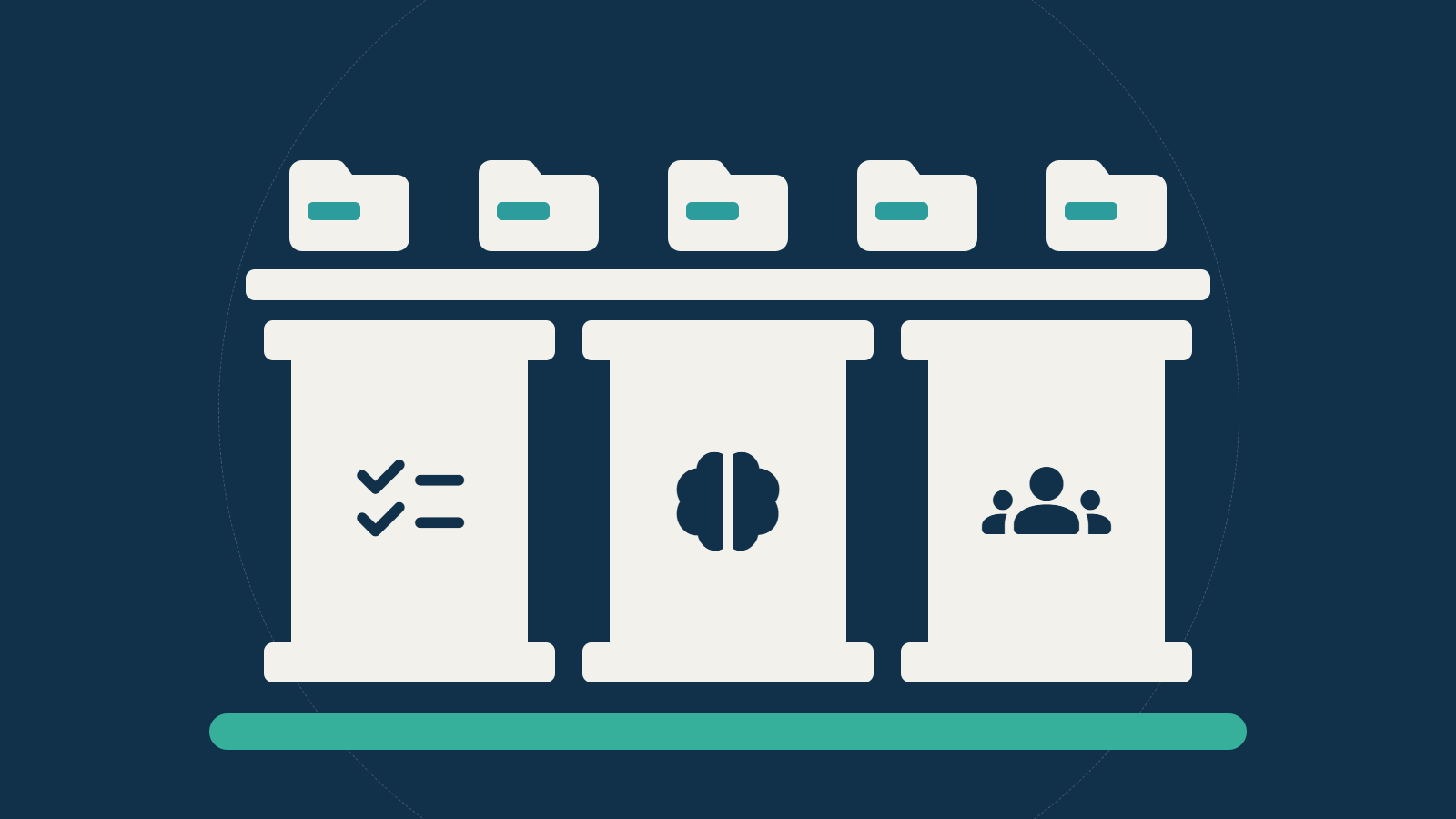
By giving one case file three kinds of capacity at once. CloudLex, one connected ecosystem built exclusively for plaintiff personal injury law firms, brings together the Platform, Lexee AI, and Paralegal Services to work on the same case from accident to resolution. Inside it, all three work on one case rather than copies passed between systems.
The Platform is the operating model: intake, matters, documents, deadlines, medical records, client communication, litigation, and settlement in one HIPAA compliant, PI-focused system of record, with standardized workflows so every case runs the same way at every desk in the firm. That is the consistency a big firm installs with managers.
Lexee AI works from the complete case file rather than a folder of uploads: demand drafting, medical summaries, answers to routine client questions around the clock, and the ability to chat with your case. Because it sees the whole matter, its output reflects the posture of the case, not just the document in front of it.
Paralegal Services is the human capacity, and it is human-led: an experienced team of PI specialists handling records retrieval, chronologies, and indexing inside your case files. The work lands in the matter, not in an inbox, so nothing has to be re-entered and nothing lives with a third party. That is the piece the AI-plus-outsourcing model gets wrong, and the piece that keeps a growing firm’s data and client relationships its own.
Where should a growing firm start?
With the seams. Before adding anyone or anything, list every place a case leaves your case management software: the outsourcer’s portal, the AI tool’s upload folder, the spreadsheet that tracks liens, the personal phone with client texts on it. Each one is a copy someone maintains, and each is a place a big firm would not tolerate.
Then count what those seams cost in hours. Removing them usually recovers more capacity than the next hire would add, and it does so without a payroll line. Our guide to managing and growing a PI law firm covers how firms build that capacity into the practice as they scale.
The advantage was never the capital
The big firms did not get big on lawyers alone. They got big by installing an operating model, because a consistent operation at volume is what makes a practice grow, and it is why investors now want a piece of them. A mid-size firm can install the same model without selling a piece of itself, by putting the whole practice in one connected ecosystem where the software enforces the process, the AI works from the full file, and the human help sits inside the matter.
That is how to scale PI firm operations without enterprise-level resources: not by copying the big firm’s headcount, but by removing the seams the big firm removed. If you would like to see how a firm of your size runs that way, schedule a demo and we will walk through it end-to-end.
Frequently asked questions
How can a mid-size PI firm scale without enterprise resources?
By standardizing operations in one connected ecosystem instead of adding managers, vendors, and outsourced labor. When intake, case management, medical records, client communication, and settlement run in one case file with defined PI workflows, consistency comes from the software, and the firm can add cases without adding seams.
How do smaller PI firms compete with the big, well-funded firms?
On the same ground the big firms compete on: consistent operations at volume. Their capital buys a management layer and a platform. A smaller firm gets the platform directly, keeps its data and client relationships in-house, and avoids sharing the upside with an investor.
What is an MSO in personal injury law?
A management services organization is an investor-backed entity that takes over a law firm’s non-legal functions, such as intake, marketing, IT, and back-office operations, while the lawyers keep ownership of the practice. It is the structure private equity uses to invest in law firms in states that prohibit non-lawyer ownership.
Is outsourcing a bad way for a PI firm to scale?
Outsourcing is not the problem. Outsourcing outside the case file is. When records, chronologies, or intake are handled by a vendor working from an export, the firm maintains a second copy of the case and reconciles it by hand. Human help inside the same matter, such as Paralegal Services, adds capacity without adding a seam.
Does a mid-size firm need its own AI platform?
No. Building proprietary AI is what a big-firm budget buys. What matters for a mid-size firm is that its AI works from the complete case file rather than from uploaded documents, so the output reflects the whole matter. That is what Lexee AI does inside the CloudLex ecosystem.
What should a growing PI firm fix first?
The places where a case leaves the case management software. Every export, upload folder, tracking spreadsheet, and personal phone is a copy someone maintains. Removing those seams typically recovers more capacity than the next hire, at no payroll cost.


