

Request a Demo

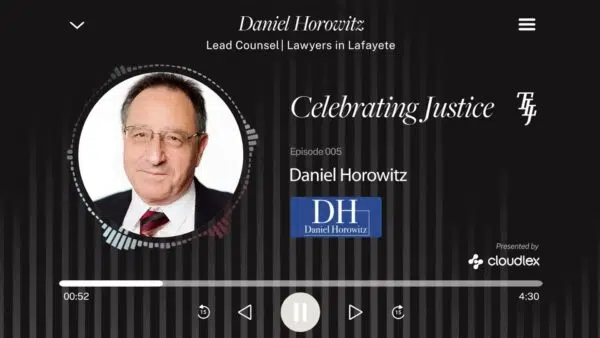
Daniel Horowitz’s “Closing Argument”

By CloudLex Team

Closing Argument Cover Daniel Horowitz

I think I would like to share with people the concept of using the law to do good, but understanding how that balances with family obligations and the need to make money.

This article was originally published in the Trial Lawyer’s Journal. Explore more stories here.

Click here to listen to the full episode.


Because I see so many people feeling like they have to achieve a social goal, make it a better world that we live in, and then just getting the heck beat out of them. And then I see so many people who pursue only money and forget that in the end when you die, you die with your memories of what you’ve done for people. You know, I think about my dad who’s 98 and my mom just passed and they don’t look back on how much money they made. They look back on all the children my mom helped when she was a school social worker and they look back on the young man my dad mentored when he was in trouble all the time and how he ended up having a family and joining the Navy. These are the things that my mom remembered and talked about, and my dad remembers about her and talks about now. So what does that have to do with being a lawyer? Well, I’ll tell you a story about that.

When I wanted to be a lawyer, my mom said, look, you know your cousin Marty Garbus. You know, Marty is probably the most famous First Amendment lawyer in the country. He’s represented President Reagan, the Nazis who wanted to march in Skokie, Lenny Bruce, the comedian. He’s had four civil rights cases in the Supreme Court that got people voting rights. I want you to talk to him about your goals because I support you in your goal to be a lawyer to help the working people and make things right. But I want you to talk to Marty. So we all went to lunch. My mom had actually raised Marty after his mom died. They were very close. And Marty said, look, to be a lawyer who’s successful and does good in the world, just remember that you have to have money behind you. You have to have financial strength.

And he said, let me give you an example. And he went through all the famous lawyers of the sixties. You remember William Kunstler, Dan, you know him? I go, yeah, I know William Kunstler. He’s famous. Well, did you know that his girlfriend inherited millions of dollars and she supports him? No, I didn’t know that. I just thought he got his money from his cases. All right, now you know. And he went through the list of all of these sixties radical icons and told me their source of money. He said, how are you going to do a case if you can’t pay for an investigator, if you can’t pay for paralegals? They’re not going to work for free. So he said, you’ve got to balance making money with doing good. And he said, then you will have achieved your true goals, but don’t be embarrassed to ask to be paid from people who can afford it. So if you look at a personal injury practice, for example, does that support your civil rights work?

The case that I’m doing that I talked about earlier, I talked about this child who was killed by John Muir Hospital and how we are fighting to improve John Muir Hospital. If I didn’t have financial strength, could I have laid out the money to handle that case? So never be embarrassed to make money, and never be embarrassed to have heart, because they go together and they don’t contradict. So remember what my mom did with her career, helping people, what my dad did helping people, not just with that young man, but his whole career was helping the working people save money and buy houses. And remember young lawyers that use something like CloudLex, use the tools, go to bar meetings, ask people for help, and contribute to your community, but always take care of yourself and your family. They go together and they bind together, they’ll make you strong, and they’ll make it a better world too.

Share

Featured Articles

View More
Michael-Stephenson's Closing Argument

Michael Stephenson’s “Closing Argument”

Holding corporations accountable through personal injury law
Read more
Boeing Settles Ethiopian Airlines Flight 302 Case Ahead of $28 Million Verdict

Boeing Settles Ethiopian Airlines Flight 302 Case Ahead of $28 Million Verdict

Boeing settlement underscores aviation accountability and risk
Read more
Could RICO Finally Hold Big Pharma Accountable for Hidden Drug Risks?

Could RICO Finally Hold Big Pharma Accountable for Hidden Drug Risks?

Actos RICO case signals stronger pharma accountability
Read more
Closing Argument Cover Alyce Wittenstein

Alyce Wittensteins “Closing Argument”

Contingency fees make justice more accessible
Read more
Cynthia Attard's Closing Argument

Cynthia Attard’s “Closing Argument”

Confidence grows through humility, patience, and grit
Read more
Jason DeSouza's Closing Argument

Jason DeSouza’s “Closing Argument”

Purpose and financial strength can work together
Read more
Adam Wolk's Closing Argument

Adam Wolk’s “Closing Argument”

Personal injury law helps keep society safe
Read more
Sylvia V. Gonzalez’s “Closing Argument”

Sylvia V. Gonzalez’s “Closing Argument”

Let doubt fuel your drive to succeed
Read more

Share your story with Trial Lawyer’s Journal

Trial Lawyer’s Journal is built on the voices of trial lawyers like you. Share your journey, insights, and experiences through articles, interviews, and our podcast, Celebrating Justice.

Become a Guest
TLJ_Become a Guest

I think I would like to share with people the concept of using the law to do good, but understanding how that balances with family obligations and the need to make money.

This article was originally published in the Trial Lawyer’s Journal. Explore more stories here.

Click here to listen to the full episode.


Because I see so many people feeling like they have to achieve a social goal, make it a better world that we live in, and then just getting the heck beat out of them. And then I see so many people who pursue only money and forget that in the end when you die, you die with your memories of what you’ve done for people. You know, I think about my dad who’s 98 and my mom just passed and they don’t look back on how much money they made. They look back on all the children my mom helped when she was a school social worker and they look back on the young man my dad mentored when he was in trouble all the time and how he ended up having a family and joining the Navy. These are the things that my mom remembered and talked about, and my dad remembers about her and talks about now. So what does that have to do with being a lawyer? Well, I’ll tell you a story about that.

When I wanted to be a lawyer, my mom said, look, you know your cousin Marty Garbus. You know, Marty is probably the most famous First Amendment lawyer in the country. He’s represented President Reagan, the Nazis who wanted to march in Skokie, Lenny Bruce, the comedian. He’s had four civil rights cases in the Supreme Court that got people voting rights. I want you to talk to him about your goals because I support you in your goal to be a lawyer to help the working people and make things right. But I want you to talk to Marty. So we all went to lunch. My mom had actually raised Marty after his mom died. They were very close. And Marty said, look, to be a lawyer who’s successful and does good in the world, just remember that you have to have money behind you. You have to have financial strength.

And he said, let me give you an example. And he went through all the famous lawyers of the sixties. You remember William Kunstler, Dan, you know him? I go, yeah, I know William Kunstler. He’s famous. Well, did you know that his girlfriend inherited millions of dollars and she supports him? No, I didn’t know that. I just thought he got his money from his cases. All right, now you know. And he went through the list of all of these sixties radical icons and told me their source of money. He said, how are you going to do a case if you can’t pay for an investigator, if you can’t pay for paralegals? They’re not going to work for free. So he said, you’ve got to balance making money with doing good. And he said, then you will have achieved your true goals, but don’t be embarrassed to ask to be paid from people who can afford it. So if you look at a personal injury practice, for example, does that support your civil rights work?

The case that I’m doing that I talked about earlier, I talked about this child who was killed by John Muir Hospital and how we are fighting to improve John Muir Hospital. If I didn’t have financial strength, could I have laid out the money to handle that case? So never be embarrassed to make money, and never be embarrassed to have heart, because they go together and they don’t contradict. So remember what my mom did with her career, helping people, what my dad did helping people, not just with that young man, but his whole career was helping the working people save money and buy houses. And remember young lawyers that use something like CloudLex, use the tools, go to bar meetings, ask people for help, and contribute to your community, but always take care of yourself and your family. They go together and they bind together, they’ll make you strong, and they’ll make it a better world too.